Canine Foundations
37 questions. Read the study material and complete step 1, then enrol for £31.25 (grading and certificate included) to unlock the rest. Progress is saved on this device, so you can leave and return at any time.
Study Material
Use the material below as a foundation for deeper research, then confirm you have read it to begin the assessment.
This assessment is designed to evaluate the knowledge and skills of a dog handler-trainer-boarder-walker, ensuring that you possess the requisite understanding to handle dogs safely and effectively.
Dogs are “pattern-seeking” animals. Consistency is the most important factor because it provides cognitive clarity. If rules change-or if different handlers use different commands-the dog becomes stressed and confused. A steady routine helps lower cortisol levels and reinforces learned behaviors efficiently.
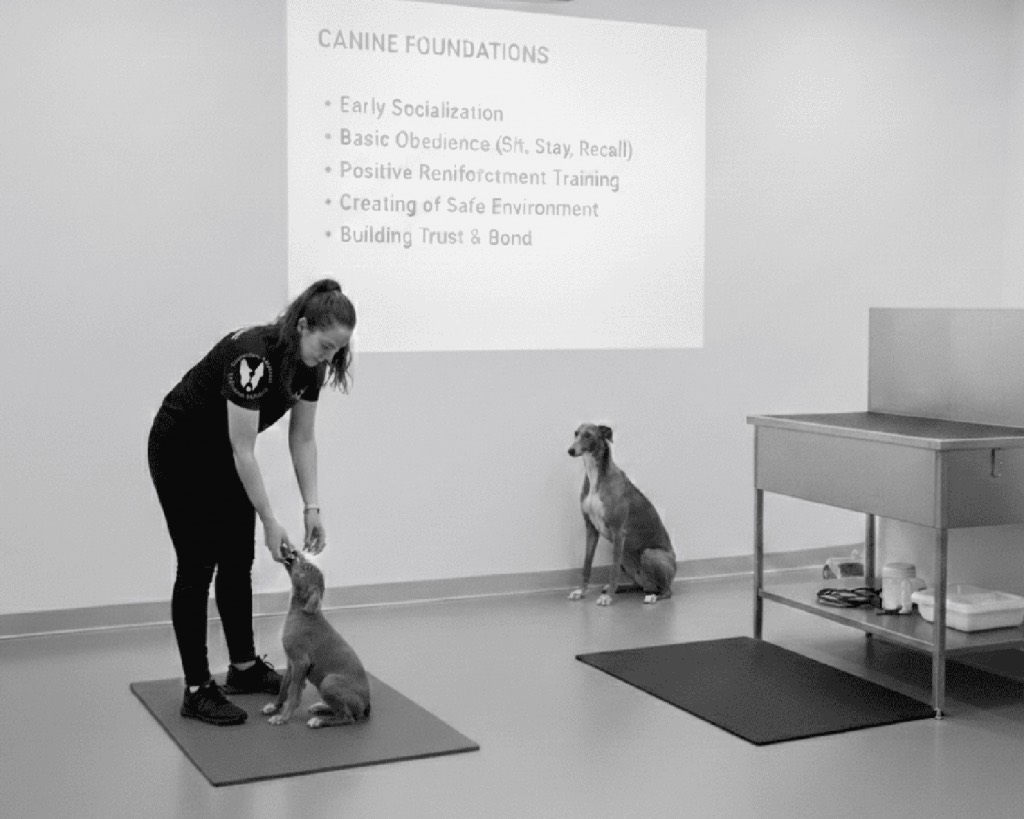
Positive Reinforcement (R+) is the process of adding a reward (food, toy, praise) immediately after a desired behavior to increase the likelihood of that behavior happening again. It teaches behaviours clearly, without relying on fear-based compliance. For recall, trust is built first, through calm, patient handling rather than food.
Recall is the most critical off-leash skill. It is a safety command designed to protect the dog from hazards like traffic or aggressive wildlife. A reliable recall is built on trust first, then on a well-taught signal, with a reward on every return and the “high-value” rewards kept for the best recalls, so the dog always associates returning to the handler with a positive outcome.
According to the AKC (American Kennel Club), aggression is often a manifestation of fear or stress. The first step when a dog shows signs of aggression is management and de-escalation.
- Safety First: Create physical distance between you and the dog. Avoid Punishment: Correcting a dog for growling can “remove the warning sign,” leading to a bite without notice in the future.
Successful introductions depend on the environment and the individual character of the dogs. It is best to introduce dogs slowly and under supervision on neutral ground. This prevents territorial guarding and allows both dogs to assess each other’s body language without feeling “trapped.”
When a dog is afraid (e.g., thunderstorms), the best approach is to give a safe space and stay calm and matter of fact. Do not fuss anxiously, because that tells the dog something really is wrong. For a true phobia, talk to a vet ahead of the storm or firework season. Forcing a dog to confront a noise they fear can lead to “flooding,” which increases the phobia and can damage the bond between the dog and the handler.
A basket-style muzzle is the expert-recommended choice for public use.
- Thermoregulation: Unlike fabric muzzles, a well-fitted basket muzzle lets the dog open its mouth into a real pant, which is how they cool their bodies. It still narrows cooling, so keep muzzled exercise short in warm weather. Welfare: It allows the dog to drink water and receive treats during training while maintaining safety for the environment.
When used correctly, an e-collar acts as a long-range communication tool, providing a tactile “tap” to get a dog’s attention at a distance. However, it requires professional knowledge because misuse can cause physical or emotional harm. It must never be used as a punishment.
To prevent or treat separation anxiety, a dog must be gradually acclimated to being alone. This involves very short departures (seconds to minutes) that increase only when the dog remains relaxed, ensuring they never reach a state of panic.