Our Method
Sighthounds are not retrievers or collies. They are independent hunters, hard-wired to lock onto movement and give chase, and they feel human emotion keenly. Train them the way you would a Labrador and you will lose. Every part of my method is built around how these dogs actually think, so recall holds even when a squirrel breaks cover on open parkland.
First, let us talk about the e-collar
This is the single biggest worry owners bring to me, so I want to settle it honestly. An e-collar is not a shock collar. At the correct, individually calibrated level it is a gentle muscle pulse, no stronger than a tap on the shoulder. It is a quiet way to say “come back” through the wall of adrenaline a sighthound runs into mid-chase.
It is also far safer than the alternative. A long line on a dog that can hit 45mph is a genuine danger. When a sprinting hound reaches the end of that line, the result can be snapped tendons, a broken leg or severe rope burn. The e-collar carries none of that risk.
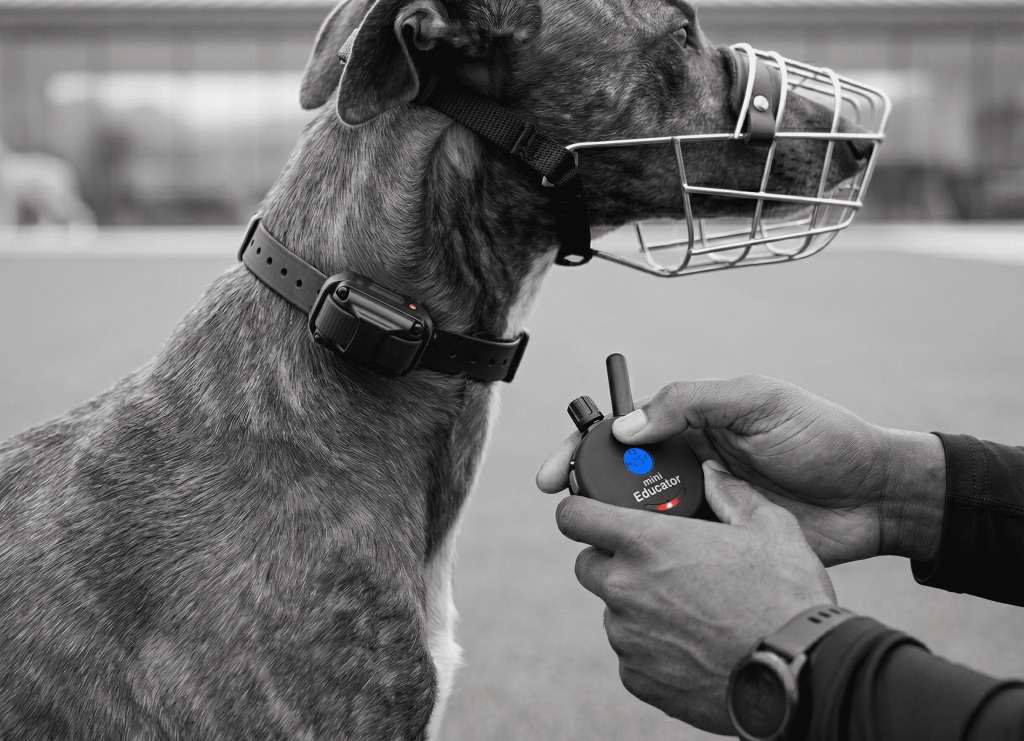
Before I fit one to any dog, I fit it to the owner’s own arm first and let you feel it at the working level. If you are not comfortable with what you feel, I do not proceed. No exceptions. The tool only works when it is calibrated to your individual dog and used with care, which is exactly why this is a job for a professional and not something to experiment with at home.
Reading the chase
To understand why timing matters so much, you have to understand what happens inside a sighthound when prey appears. Calm and neutral, they are receptive and a subtle cue lands easily. The moment they lock on, the heart rate climbs and the gaze narrows. Once they are at full speed, adrenaline floods the body, the senses tunnel in, and a command that worked perfectly in the garden is simply not heard.
So the signal has to arrive the second the dog locks on, not once the chase is already underway. Get the timing right and you rarely need much more than the lightest cue. Leave it too late and no level of anything will reach them. Good recall is built on reading that moment, not on stimulation.
The Silent Authority approach
Sighthounds are acutely tuned to your energy, and to them volume is not authority. Shouting reads as panic, and panic spreads straight to the dog. A steady, calm presence is the real signal that tells your hound the situation is under control.
Because these breeds have exceptional eyesight, I lean on what they see rather than what they hear. Clear hand signals carry further and stay calmer than a voice that cracks across a windy heath. An e-collar cue is emotionless and consistent in a way a frustrated voice can never be. And my own composure models the calm I want the dog to settle into.
Part of authority is knowing when to lead a dog away from a situation that is beyond its threshold. We move off slowly and backwards so the hound naturally turns towards me, and I reward that head-turn the instant it happens. House rules, walking at heel, waiting calmly at doors, are set through quiet, relentless repetition, never through noise.
Positive reinforcement, every time
The e-collar communicates. The reward is what builds the behaviour. When your hound chooses you over the chase, the payoff has to be enormous, because for a sighthound nothing competes with prey unless you make coming back the better deal.
- High-value food. Warm, strong-smelling meat delivered as a continuous stream for several seconds on return, not one dry biscuit. The point is to make staying with you genuinely worth it.
- The chase itself as the reward. A sighthound’s favourite thing in the world is to run. Turn away from the distraction and I might release a different ball, or send them off to chase on my terms. Few rewards land harder.
- Charge the signal first. Before any of this works in the real world, the cue is paired with reward until the dog looks to you expectantly the moment it perceives it.
Building distraction recall in the real world
We do not jump straight to a busy park. Reliable recall is layered up in stages, starting with a rock-solid foundation in a calm, secure space, then introducing controlled distractions one at a time, a stationary helper, then a moving one, then a sudden trigger crossing the dog’s path. We only raise the difficulty once the current level is flawless, so the dog is set up to succeed and never rehearses failure.
Sessions stay short. These dogs tire mentally fast, so we keep the work crisp and always finish on a win. From there we take it out into the environments your dog actually lives in, the open ground of parks across London, the pavements and streets, where the work has to hold for real.
The Big Six commands
Underpinning all of it are six commands every well-trained sighthound should know cold. These give you control in any situation and form the backbone of the recall work.
- Recall, the emergency “come back to me, now” that everything else serves
- Stay, holding position until released
- Wait, a brief pause, at a kerb, a door or a gate
- Sit
- Down
- Heel, walking calmly at your side
Each one is taught with a clear visual signal alongside the word, so that in time your dog responds to the gesture alone, silently, across a distance, even with the wind in their ears.
How recall training works with me
Recall training is built into a residential board, not bolted on as a separate course. Your dog lives with me, works in real London environments through the day and settles into a calm home in the evening, which is exactly how lasting behaviour is formed. There are two ways in: a seven-night stay covering e-collar conditioning only (£850), or the full twenty-one-night training package (£1,700). You can see both on the services page.
Every dog begins with a meet and greet and a one-night assessment, so I can read your hound and shape the work around them. You stay involved throughout with daily WhatsApp photo and video updates, and you go home with a clear plan to keep building on what we have done.
Get in touch to arrange a meet and greet and we can talk through what your sighthound needs.